Interfaces that feel effortless.
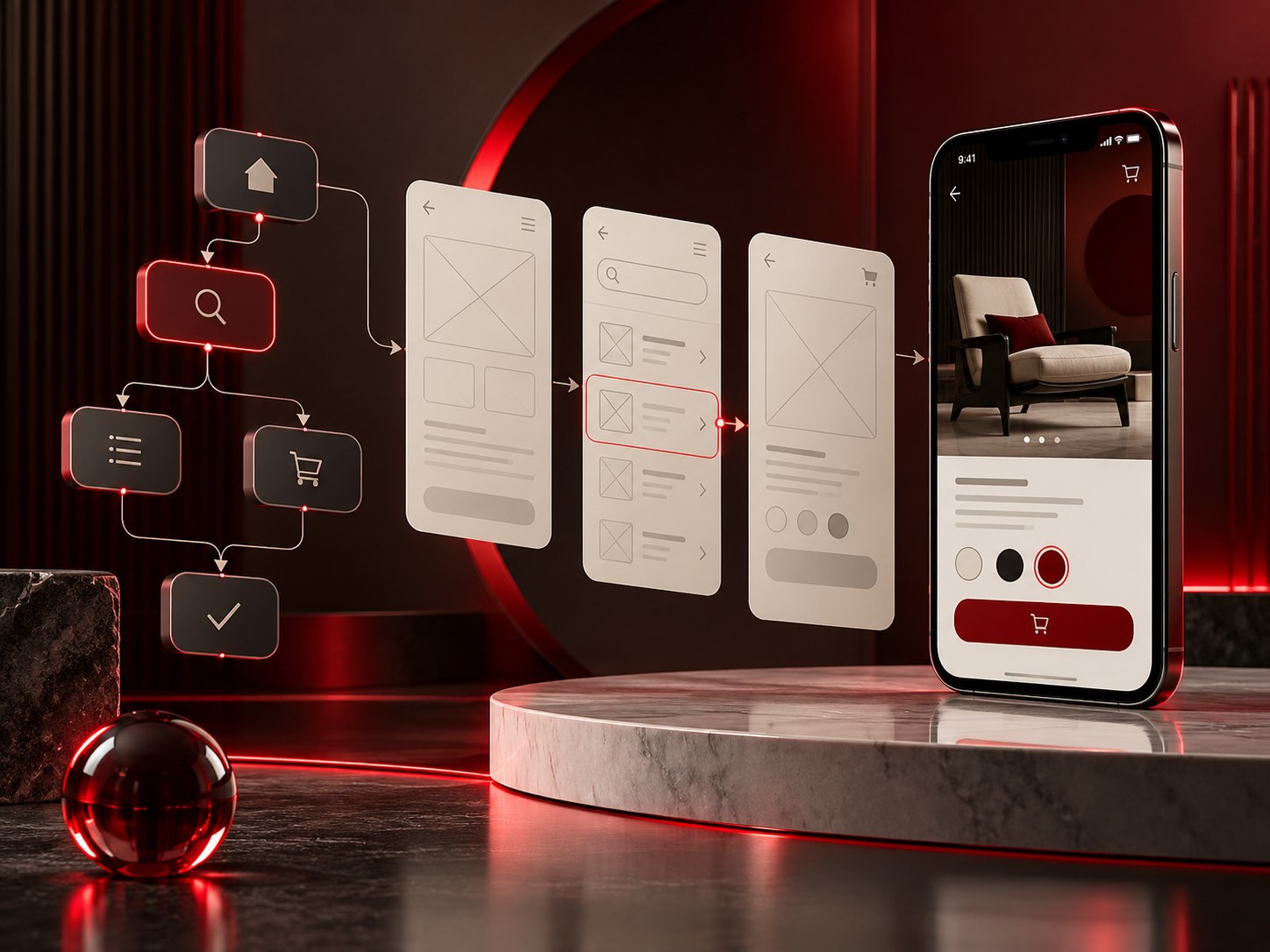
Research, wireframes and clickable prototypes that settle how the product works before anyone writes code, so you are not paying to rebuild a flow twice.
Every interface decision is cheap in a wireframe, moderate in a design file and expensive in production code. Most teams make them in the wrong order.
We prototype the hard flows first, put them in front of real users, and only then hand anything to development.
Tell us about your product
Thanks, .
Your details are captured in this preview. Connect this form to your CRM or email endpoint before launch so requests reach the team.
Settle the hard flows before you build them
The parts of a product that frustrate people are rarely the parts anyone argued about. They are the empty states, the error cases, the second-time-through flow and the step where the user has to guess what happens next.
We map those explicitly — user flows, edge cases and states — then wireframe at low fidelity so the structure can be challenged before anyone is attached to a visual.
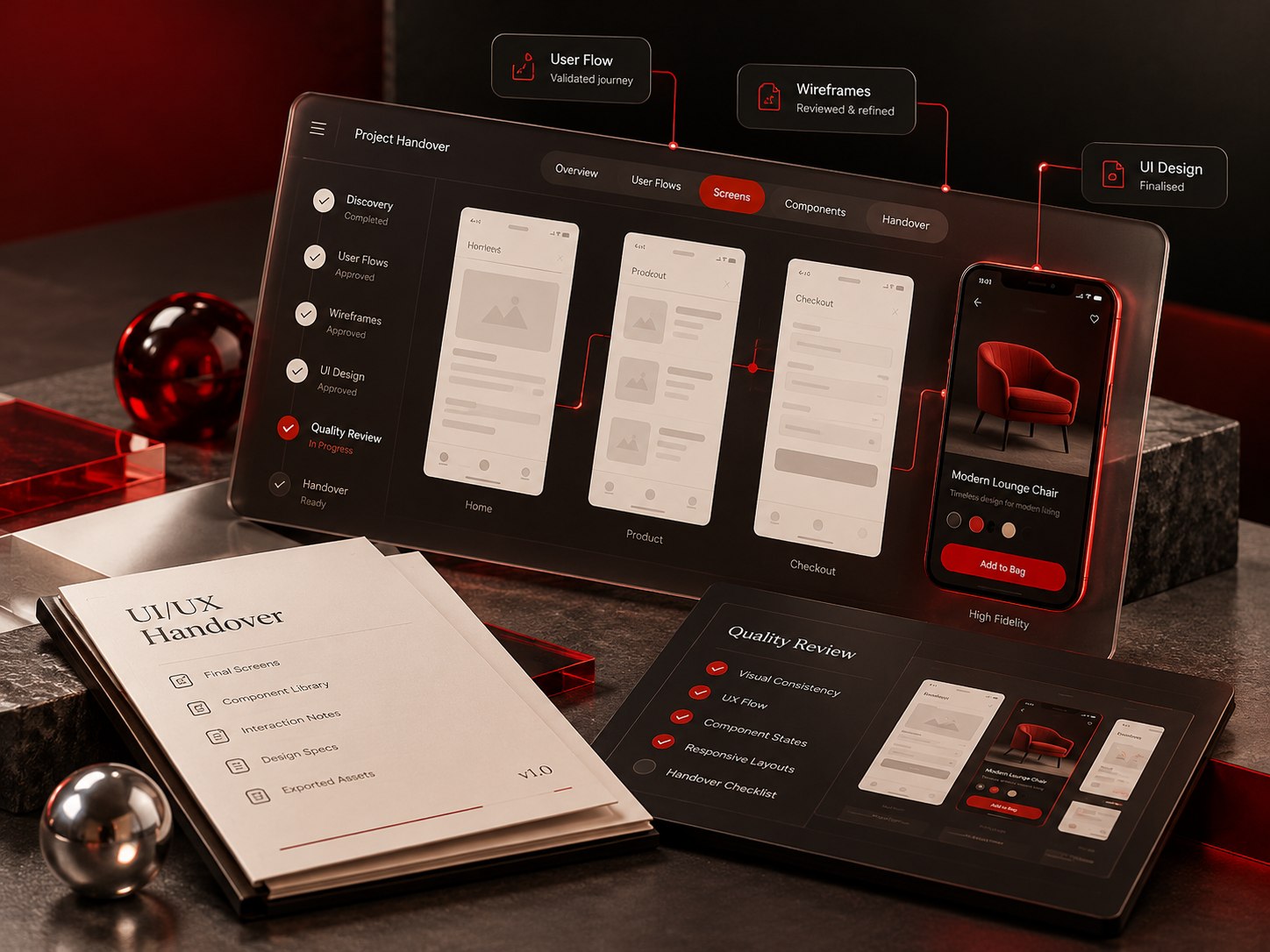
The output is a clickable prototype and a documented component library: every state, every breakpoint, every interaction, specified so the build matches what was tested.
What’s included
Fixed scope agreed in writing before we start, so you know exactly what is delivered and when. Anything outside it is quoted separately rather than absorbed quietly.
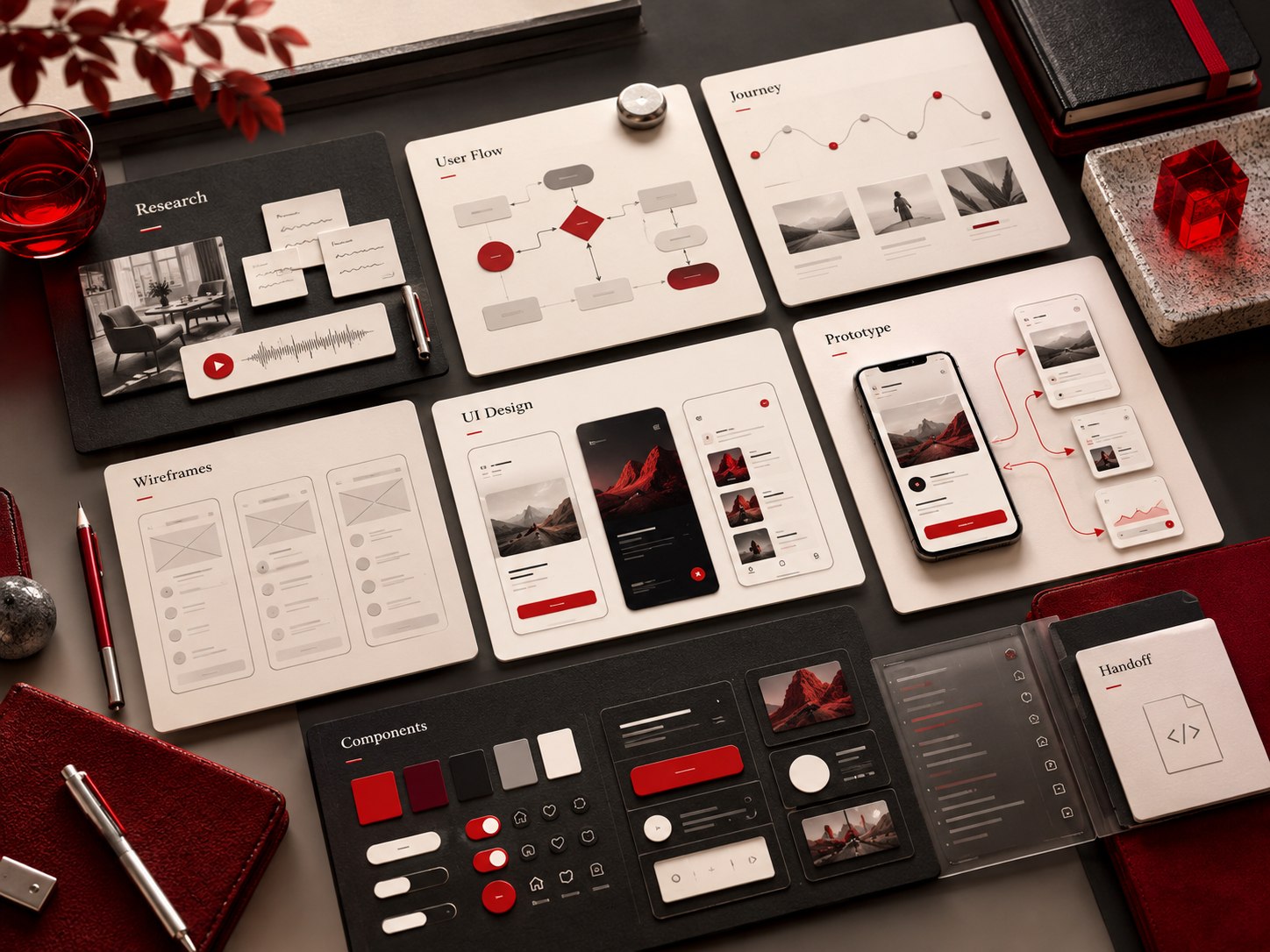
- User research and interviews
- User flows and journey mapping
- Low-fidelity wireframes
- High-fidelity UI design
- Clickable prototype and testing
- Component library and handoff
Let’s design the experience.
Tell us where things stand today and we’ll reply within one business day with an approach and a realistic estimate.
Why brands keep building with us
Plenty of agencies hand over a website and disappear. We are still here six months later, because the people who designed and built it are the same people who pick up when something needs changing.
Everything happens in-house. Strategy, design, engineering, content and marketing sit in one team of 200+ specialists, so nothing falls through the gap between disciplines.
Over ten years we have launched and grown more than 500 brands across the US, UK, Canada and Germany. You get one point of contact, a staging site you can click through at every milestone, and documentation you own outright.
From scope to stable release
Short sprints, shared boards and a staging site you can click through at every milestone.
Requirements
Features, integrations and success metrics agreed in a written specification.
Prototype
Clickable prototypes validate flows on real devices before development begins.
Develop & test
Sprint-based development with code review, automated checks and QA.
Release & support
Zero-downtime launch, redirects verified, analytics wired and a support plan that fits.
UI/UX Design questions
Scope, timelines, ownership and what we need from your side.
UX is how it works — structure, flows, what happens when something goes wrong. UI is how it looks and responds. A good product needs both, and the UX decisions should come first.
Where the budget allows, yes — usually five to eight moderated sessions on the prototype, which is enough to surface most usability problems before build.
Routinely. We hand over a documented component library with states and specs, and stay available during the build for the questions that always come up.
Yes. We start with analytics, support tickets and a usability review of what exists, so the redesign fixes known problems rather than guessed ones.